
Japanese Sculptures: Traditional Cultural Art
Our collection brings together creations inspired by samurai traditions, Kabuki theatre, Hinamatsuri, cherry blossoms and Japanese folklore, among many other cultural expressions. Rather than reproducing these references literally, we study their meaning, symbolism and visual language before translating them into porcelain through our own artistic interpretation.
Every sculpture reflects a different aspect of this cultural universe. Some convey discipline, honor and strength; others evoke celebration, grace, renewal or the continuity of tradition. Together, they offer a respectful interpretation of Japanese culture through modeling, decoration and the expressive possibilities of porcelain.
How we translate japanese aesthetics into spanish porcelain
Interpreting Japanese culture through porcelain requires close attention to the details that make each subject recognizable. Our sculptors study posture, costume, gesture and symbolism before shaping every composition, whether recreating the controlled stance of a samurai, the expressive language of Kabuki theatre or the ceremonial harmony of Hinamatsuri.
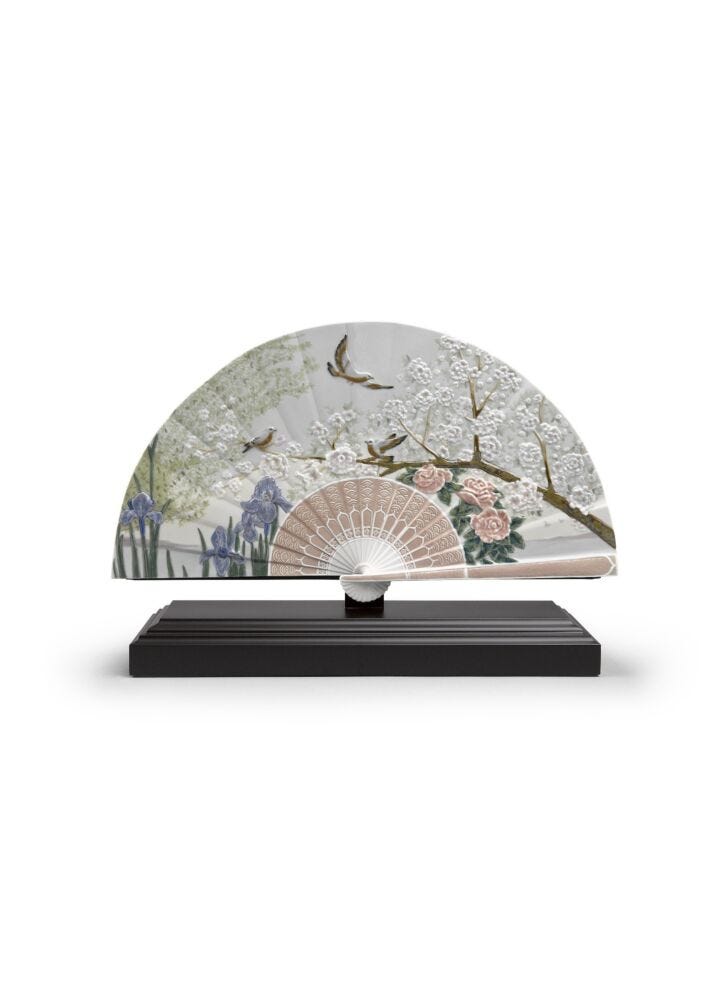
Decoration plays an equally important role. The textures of kimono fabrics, the complexity of samurai armor, the delicacy of cherry blossom branches and the ornamental details of ceremonial helmets are recreated through hand-applied techniques developed in our workshop. Matte and glazed finishes, metallic lusters and carefully layered colors allow each creation to express a different visual and emotional character.
When floral elements are present, every porcelain petal is individually shaped, assembled and applied by hand. These delicate components require exceptional precision, as do the smallest armor details, textile patterns and facial expressions. The same technical expertise defines our handcrafted porcelain process, where modeling, decoration and firing come together to preserve the identity of every sculpture.
Each creation is fired at temperatures of up to 2,372°F, during which the porcelain naturally reduces in size. This transformation reveals the final proportions, colors and finishes while preserving the accuracy of every carefully modeled and decorated detail.
Japanese aesthetics beyond sculpture
Japanese aesthetics have inspired generations of artists through their emphasis on balance, simplicity and a close relationship with nature. These principles continue to influence many of our porcelain creations, where careful composition, refined decoration and thoughtful use of space become as important as the subject itself.
Within our sculpture collection, these ideas take shape through the strength of samurai traditions, the elegance of Kabuki costumes, the symbolism of Hinamatsury and the fleeting beauty of cherry blossoms. Although each creation draws inspiration from a different aspect of Japanese culture, they share a common artistic language based on harmony, craftsmanship and meticulous attention to detail.
This dialogue with Japanese aesthetics extends beyond sculpture. The same appreciation for balance, simplicity and the relationship between light and material can also be found in our porcelain lighting collections. Collections such as Mokuren, designed by Japanese designer Naoto Fukasawa, explore these principles through illuminated porcelain, demonstrating how Japanese artistic sensibility continues to inspire different creative expressions at Lladró.
Artistic variations across our japanese culture sculptures
Japanese culture embraces a wide variety of artistic traditions, each with its own visual language and symbolism. Our collection reflects this diversity through sculptures inspired by warriors, ceremonial celebrations, performing arts, nature and folklore, allowing each creation to explore a different facet of Japanese culture while remaining unmistakably Lladró.
and ceremonial helmets express honor, discipline and resilience through richly detailed armor, textured surfaces and metallic lusters that enhance ornamental elements. In contrast, creations inspired by Kabuki theatre emphasize movement, elaborate costumes and expressive gestures, capturing the theatrical character of one of Japan's best-known performing arts.
Other sculptures celebrate seasonal traditions and the natural world. compositions reinterpret one of Japan's most cherished annual celebrations with carefully balanced arrangements and refined decorative details, while cherry blossom creations evoke renewal and the fleeting beauty of nature through individually hand-applied porcelain flowers. Themes drawn from Japanese folklore add yet another dimension to the collection, illustrating how stories and traditions continue to inspire contemporary porcelain art.
Whether interpreted through glazed or matte finishes, delicate floral ornamentation or richly decorated surfaces, each sculpture reflects a different artistic approach while sharing the same commitment to craftsmanship, cultural respect and handmade porcelain.
Japanese-inspired sculptures in contemporary interiors
Japanese aesthetics have long been associated with harmony, balance and a thoughtful relationship between objects and the spaces they inhabit. These same principles guide the way our Japanese-inspired sculptures interact with contemporary interiors, where every creation contributes through its sculptural presence, refined craftsmanship and carefully considered composition.
Different subjects create different visual dialogues. Samurai traditions and ceremonial helmets convey strength and permanence through their architectural forms and richly detailed ornamentation, while sculptures inspired by Hinamatsuri, cherry blossoms and Japanese performing arts introduce a quieter rhythm, expressing elegance through flowing lines, delicate decoration and subtle symbolism.
Whether interpreted through glazed or matte porcelain, these creations share an aesthetic language that values proportion, restraint and attention to detail. Rather than dominating a space, they become part of it, bringing together Japanese artistic inspiration and Spanish porcelain craftsmanship in interiors that celebrate beauty, culture and timeless design.
When a japanese culture sculpture makes a meaningful gift
A sculpture inspired by Japanese culture is more than an artistic creation; it is a meaningful way to celebrate values that resonate across cultures. Honor, perseverance, harmony, renewal and respect for tradition are themes that give these creations a significance extending far beyond their decorative presence.
Different subjects naturally suit different occasions. Samurai-inspired sculptures are often chosen to recognize determination, achievement or personal resilience, while cherry blossom creations symbolize new beginnings and the beauty of life's changing seasons. Sculptures inspired by Hinamatsuri celebrate family traditions and wishes for happiness and prosperity, while themes drawn from Japanese folklore reflect imagination, courage and the enduring power of storytelling.
Whether marking a graduation, a new home, a professional milestone or another important occasion, these sculptures offer a lasting expression of appreciation through the artistry of hand-made porcelain, combining cultural inspiration with craftsmanship that is designed to endure for generations.
Frequent Asked Questions
What do cherry blossoms symbolize in japanese culture?
Cherry blossoms, or sakura, are among the most enduring symbols of Japanese culture. Their brief flowering season represents renewal, the beauty of the present moment and the cyclical nature of life. Our sculptures reinterpret this symbolism through delicately modelled branches and individually hand-applied porcelain flowers, celebrating both the visual beauty and the cultural significance of one of Japan's most cherished natural motifs.
How should I care for japanese porcelain sculptures?
The appropriate care depends on the decorative finish of the sculpture.
Creations without metallic decoration may be cleaned with lukewarm water and a few drops of neutral soap, using a soft brush for delicate details. Sculptures decorated with gold, silver or platinum lusters should be dusted with a feather duster or a soft, dry cloth. Avoid abrasive products, dishwashers, microwaves and prolonged immersion in water, paying particular attention to delicate elements such as porcelain flowers, textile details and ornamental accessories.
What do hina dolls represent in japanese culture?
Hina Dolls are displayed during Hinamatsuri, or Girls' Day, one of Japan's best-known seasonal celebrations. Traditionally arranged on tiered platforms, they express wishes for health, happiness and prosperity while celebrating family traditions passed down through generations. Our porcelain interpretations draw inspiration from this centuries-old custom, preserving its ceremonial elegance and symbolic richness through hand-made craftsmanship.
What handmade techniques make our japanese porcelain sculptures unique?
Every sculpture is created by hand in our workshop in Spain using traditional porcelain techniques refined over decades. Depending on the design, our artisans combine glazed or matte finishes, metallic lusters, an exclusive palette of more than 4,000 colors, hand-painted decoration and individually applied porcelain flowers. These techniques allow each sculpture to faithfully interpret Japanese artistic traditions while giving every creation its own distinctive character.
How do I verify the authenticity of a Lladró japanese culture sculpture?
Every authentic Lladró sculpture bears the Lladró logotype on its base, confirming that it was created in our only workshop in Spain. Additional marks may correspond to the personal signatures of the artisans involved in its creation and form part of our hand-made process. Limited Editions and Numbered Editions are accompanied by their corresponding certificate of authenticity.
When is a japanese culture sculpture a meaningful gift?
Japanese-inspired sculptures are often chosen to celebrate milestones, new beginnings and achievements that reflect values such as perseverance, harmony and renewal. Samurai themes naturally commemorate determination and resilience, while cherry blossom creations symbolize hope and new chapters. Sculptures inspired by Hinamatsuri or Japanese folklore also make thoughtful gifts for those who appreciate cultural traditions, craftsmanship and meaningful artistic expression.